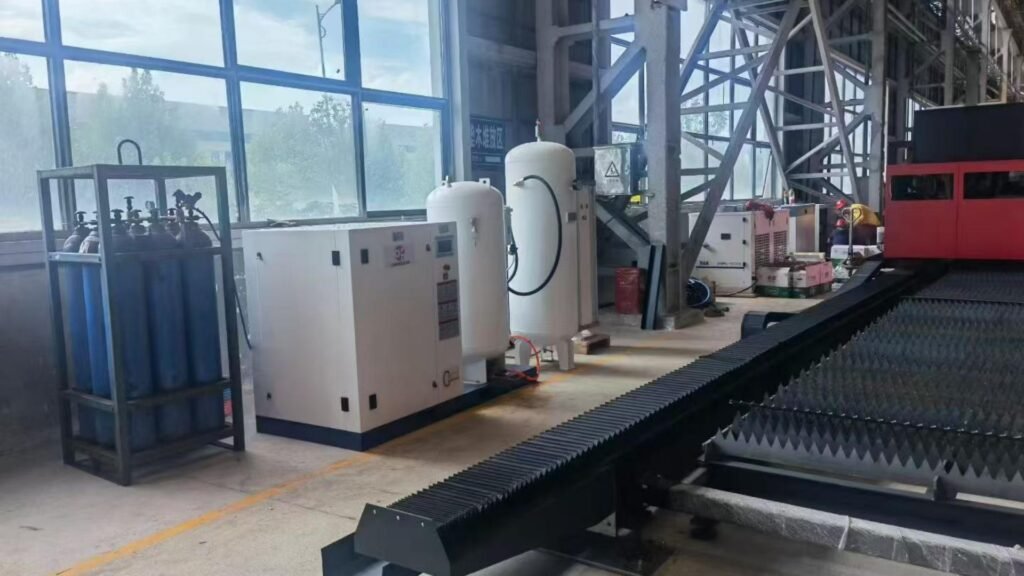
In the field of laser cutting, auxiliary gas is a core factor that affects cutting efficiency, edge quality, and overall comprehensive costs. Many processing enterprises often ask: Can laser cutting machines use an air compressor? The answer is absolutely yes.
With the advantages of low cost, easy accessibility, and high adaptability, compressed air has become a mainstream auxiliary gas solution for laser cutting. However, different laser powers have distinctly different requirements for the compressor’s pressure, flow rate, and supporting purification systems. Meanwhile, the applicable scenarios for air compressors have clear boundaries and require precise matching to balance both efficiency and cost.
This article will systematically break down this topic from four aspects: core functions, configuration comparisons, applicable scenarios, and essential requirements.
1. The Core Functions of Compressed Air in Laser Cutting
Compressed air is not a “universal gas,” but it plays a critical role under specific working conditions. Its core functions include four points:
-
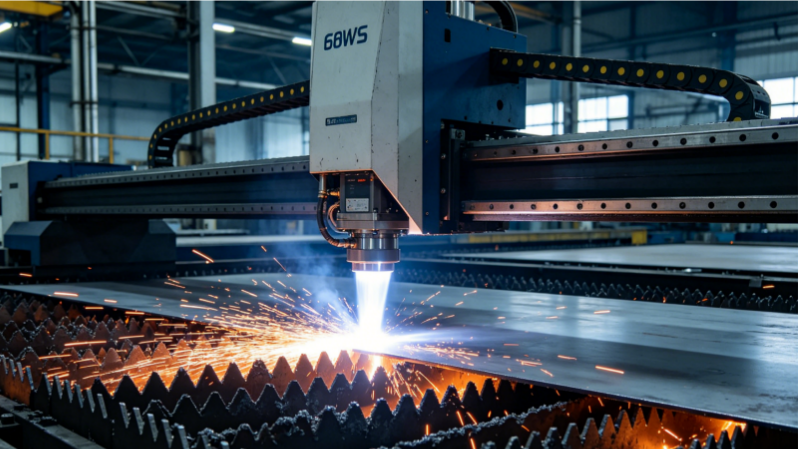
Auxiliary Oxidation Cutting: The approximately 21% oxygen in the air reacts exothermically with high-temperature carbon steel, helping the material melt and significantly increasing the cutting speed of thin carbon steel plates.
-
Blowing Away Dross: The high-pressure airflow quickly blows away molten metal and vaporized impurities in the kerf, preventing dross buildup and slit blockage, ensuring a smooth cut without burrs.
-
Protecting Optical Lenses: The high-speed airflow forms a sealed air curtain, effectively preventing smoke, dust, and metal spatter from contaminating the focusing lens, thereby extending the equipment’s lifespan and reducing maintenance costs.
-
Cooling and Shape Control: It promptly removes excess heat from the cutting area, preventing plate deformation caused by overheating. This is especially suitable for the continuous batch processing of thin plates.
2. Compressed Air vs. Oxygen / Nitrogen: A Core Comparison
Different gases are adapted to significantly different scenarios and demands. Here is a quick breakdown:
| Comparison Dimension | Compressed Air | Oxygen (O₂) | Nitrogen (N₂) |
| Cost Attribute | Extremely Low (Only electricity + filter consumables) | Medium (Requires purchasing oxygen cylinders/tanks) | High (Large gas consumption, high procurement cost) |
| Edge Quality | Light yellow/slight oxidation color, no mirror effect | Thick oxide film, smooth cut surface | Silvery-white/no oxidation, bright mirror finish |
| Cutting Efficiency | Highly efficient for medium/thin carbon steel; decreases for thick plates | Highest efficiency for thick carbon steel | Stable efficiency for stainless steel / aluminum |
| Suitable Materials | Carbon steel, galvanized sheets, thin metals, non-metals | Thick carbon steel plates and applications requiring a smooth edge | Stainless steel, aluminum, high-end carbon steel |
3. Precise Configuration Table for Air Compressors (≤20kW Lasers)
Core Premise: The air compressor power must match the gas demand of the laser equipment. The following are industry-standard configurations to avoid over-specification waste or insufficient gas supply.
| Laser Power | Common Air Cutting Thickness (Carbon/Stainless) | Suggested Compressor Power | Suggested Air Delivery | Recommended Working Pressure | Application Notes |
| 3kW | 2mm / 10mm | 15kW | 2.0~2.2 m³/min | 1.2~1.4 MPa | Mainstream configuration, balancing efficiency and edge quality. |
| 6kW | 6mm / 20mm | 18.5kW | 2.4~2.6 m³/min | 1.3~1.5 MPa | Medium power laser, reaches the upper limit of air cutting thickness. |
| 12kW | 12mm / 30mm | 22~37kW | 3.0~5.0 m³/min | 1.4~1.6 MPa | Thick plate air cutting; requires large flow to ensure continuous supply. |
| 20kW | 20mm / 50mm | 37~55kW | 5.0~7.0 m³/min | 1.5~1.6 MPa | High power laser; priority is to ensure zero interruption in gas supply. |
4. Core Applicable Scenarios for Laser Cutting Air Compressors (≤20kW)
Combining laser power, processed materials, and industry demands, the applicable scenarios for air compressors can be divided into three major categories:
(1) By Material Type: Medium/Thin Plates & Non-Metals
-
Medium/Thin Carbon Steel (≤20mm): This is the core application for air cutting. For 1~20kW lasers cutting ≤20mm carbon steel, air cutting is 2-5 times more efficient than oxygen and much cheaper. While the edge isn’t as bright as with oxygen, it meets standard blanking needs and is highly cost-effective for batch processing.
-
Galvanized & Aluminum Thin Sheets (≤30mm): Cutting galvanized sheets easily produces zinc vapor; air airflow quickly blows it away, preventing it from sticking to the nozzle. Air cutting for thin aluminum controls costs and is suitable for non-precision appearance parts.
-
Non-Metallic Materials (Acrylic, Wood, Leather, etc.): Non-metal cutting doesn’t require oxidation prevention. The air compressor’s airflow assists in cutting and blows away smoke, making it the only suitable low-cost gas solution.
(2) By Processing Demand: Cost Priority + Non-Precision Appearance
-
Batch Blanking / Small-to-Medium Parts: For standardized, mass-produced items like chassis cabinets, hardware accessories, and decorative frames, the low cost of air cutting drastically reduces expenses, perfect for price-sensitive workshops.
-
No Mirror/Oxidation-Free Requirements: If the workpiece requires subsequent painting, electroplating, or coating, or serves as a structural part rather than an aesthetic one, the slight yellowing/oxidation from air cutting will not affect its use at all.
-
Fast Changeover / Temporary Processing: Air compressors do not require frequent cylinder replacements or gas parameter adjustments. You can start cutting right upon boot, making it ideal for rush batch orders and improving machine utilization.
(3) By Industry Scenario: General Sheet Metal & Non-Precision Manufacturing
-
General Sheet Metal Processing: Conventional sheet metal parts for chassis, cabinets, shelves, and kitchen equipment are mostly medium/thin carbon or galvanized steel. Air cutting is the mainstream here.
-
Furniture Hardware & Decorative Parts: Furniture fittings, wrought iron decorations, and advertising signage have low requirements for cut edges, allowing air cutting to balance both speed and cost.
-
Automotive Interior Non-Precision Parts: Non-load-bearing structural parts like seat brackets or interior panel brackets do not need high-precision cut surfaces, making air cutting perfectly adequate.
5. Essential Requirements for Dedicated Laser Cutting Air Compressors
Standard industrial air compressors cannot be directly used for laser cutting. They must meet the following four core standards, otherwise, it will lead to equipment damage or cutting failure:
-
Oil-Free Grade: You must use an oil-free air compressor to prevent oil mist from entering the cutting head, which could burn the lens and contaminate the cut surface. If using a micro-oil machine, ultra-precision oil removal filters are mandatory.
-
Drying and Purification: It must be equipped with a refrigerated air dryer + three-stage precision filters to completely remove moisture, oil mist, and dust from the compressed air, preventing water vapor from corroding the equipment and dust from scratching the lens.
-
Stable Pressure: Gas pressure fluctuation during cutting should not exceed ±0.05 MPa. It is highly recommended to install an air receiver tank to ensure continuous supply and constant pressure.
-
Flow Matching: Strictly refer to the configuration table above. Choose the air delivery rate based on the laser power. It is better to have a slight surplus in flow (10%~20%) than to run at full load continuously, which avoids compressor overheating and shutdown.
6. Scenarios to Avoid: When NOT to Use Air Compressors (≤20kW)
Not all laser cutting scenarios are suitable for air. You must switch to Oxygen / Nitrogen in the following cases:
-
Thick Carbon Steel: For carbon steel >20mm, air cutting efficiency is extremely low, and the edges are prone to burning. Oxygen must be used.
-
High-End Appearance Parts: Food-grade sheet metal, precision medical instruments, and high-end home appliance panels require oxidation-free, mirror-bright cut surfaces. Nitrogen must be used.
-
High-Precision Structural Parts: Load-bearing and mating parts that require high-precision dimensions and cut surfaces should use Nitrogen, as the oxidation layer from air cutting will affect subsequent assembly.
Conclusion
Using an air compressor for laser cutting is entirely feasible and is the preferred, most cost-effective solution for medium and thin plate processing with ≤20kW laser machines.
The core matching logic is: Select the compressor (flow + pressure) based on the laser power, and choose the application based on your processing demands. As long as you match the appropriate air compressor to your material thickness, product precision, and industry attributes—and ensure a complete drying and purification system is installed—you can achieve highly efficient, low-cost, and stable laser cutting. In actual configuration, we recommend prioritizing the laser manufacturer’s official gas parameters and fine-tuning them according to your specific workload to avoid under-configuration or resource waste.