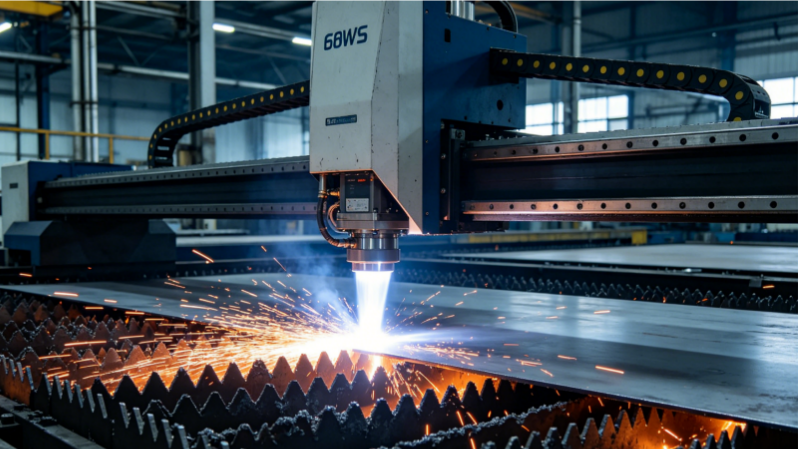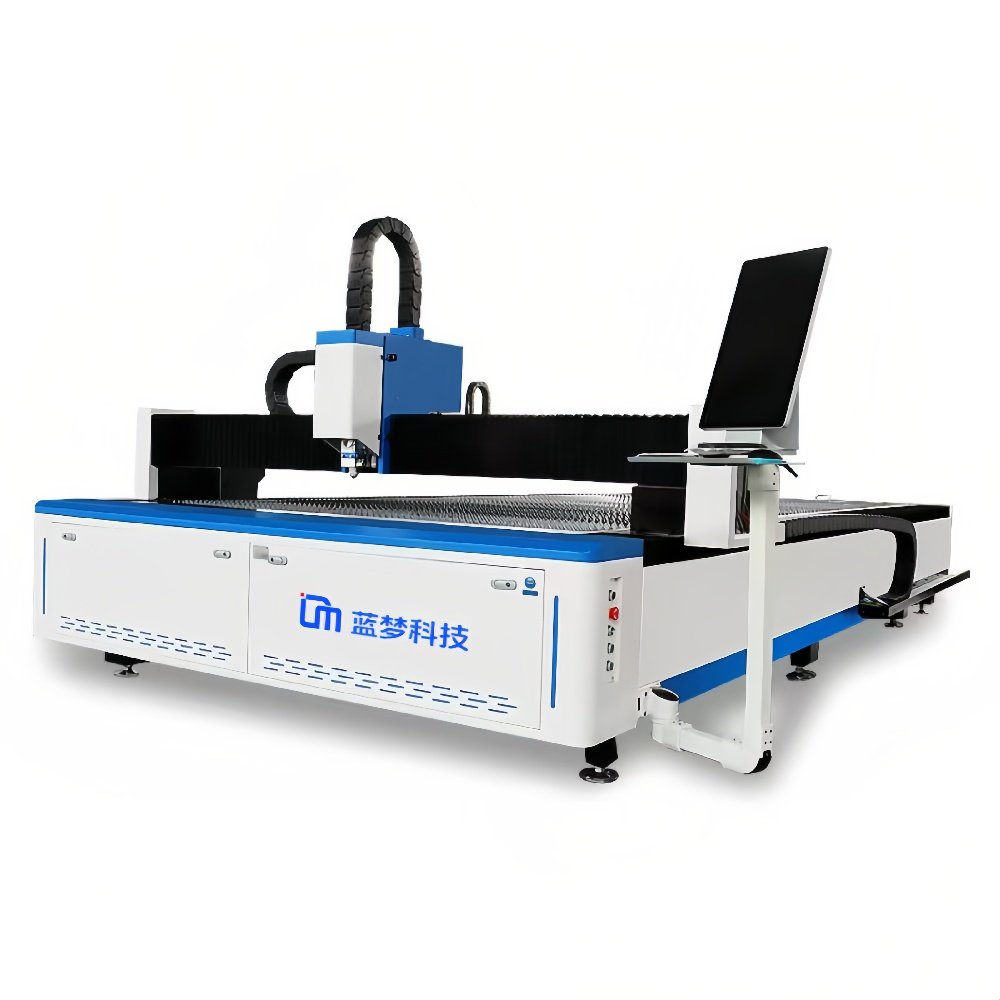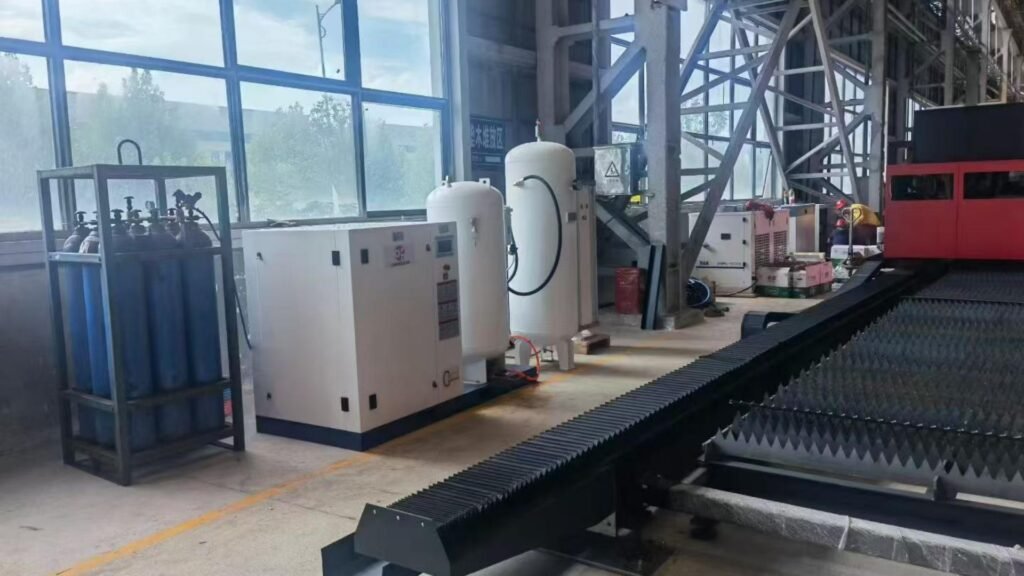
I. Laser Generation Principles
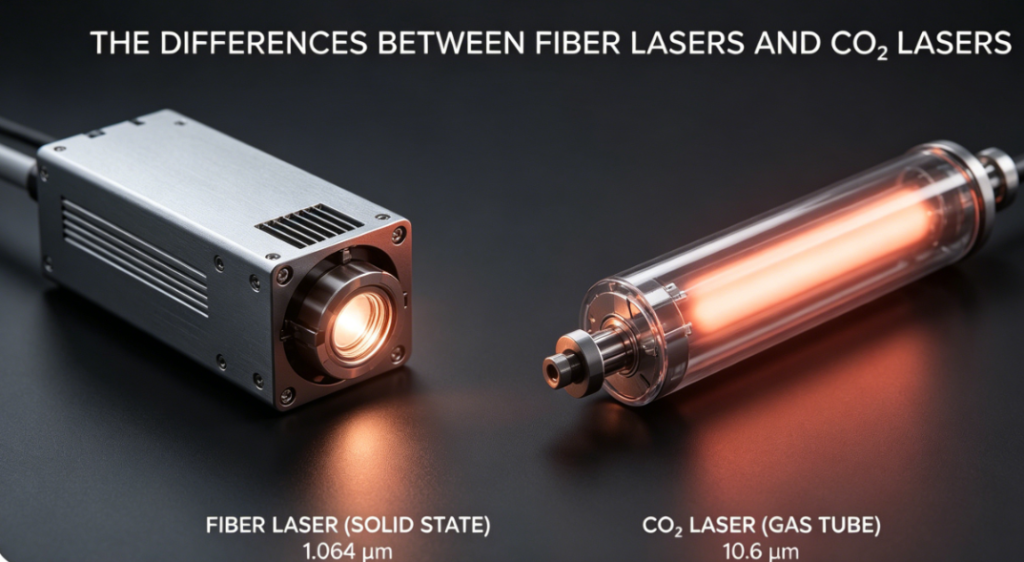
1. CO₂ Lasers
-
Type: Gas laser
-
Principle: The vacuum resonant cavity is filled with a gas mixture of CO₂, N₂, and He. High-voltage glow discharge excites the energy level transitions of gas molecules, producing a continuous laser beam via stimulated emission.
-
Wavelength: 10.6 μm (Far-infrared)
-
Optical Path: Transmitted via a series of metal reflecting mirrors. The optical path is open, requires regular calibration, and is sensitive to dust, temperature, and vibration.
2. Fiber Lasers
-
Type: Solid-state fiber laser
-
Principle: Light is emitted by a semiconductor pump source, exciting an internal Ytterbium (Yb)-doped fiber to produce stimulated emission. This is amplified within the fiber resonant cavity to form a high-power laser beam.
-
Wavelength: 1.064 μm (Near-infrared)
-
Optical Path: Transmitted directly to the cutting head via a flexible optical fiber. The optical path is fully enclosed, maintenance-free (no calibration needed), and highly stable.
II. Operating Cost Comparison (Based on 3kW Models)
1. Electricity Cost Electro-optical conversion efficiency is the core difference here:
-
CO₂ Laser (3kW): Electro-optical conversion efficiency is 10%–15%. Actual power consumption of the whole machine: ≈ 18–25 kW·h/hour. Assuming an industrial electricity rate of 1 RMB/kWh: Electricity cost ≈ 18–25 RMB/hour.
-
Fiber Laser (3kW): Electro-optical conversion efficiency is 30%–40%. Actual power consumption of the whole machine: ≈ 7–9 kW·h/hour. Assuming an industrial electricity rate of 1 RMB/kWh: Electricity cost ≈ 7–9 RMB/hour.
Conclusion: The electricity cost of a fiber laser is only about 1/3 of that of a CO₂ laser.
2. Maintenance and Consumable Costs
-
CO₂ Lasers (High Cost):
-
Essential consumables: Laser gases, vacuum pump oil, water chiller filters, multiple reflecting mirrors, and focusing lenses.
-
The optical path is prone to deviation and requires regular manual calibration.
-
Laser source lifespan: ≈ 8,000–12,000 hours.
-
Annual maintenance + consumable costs for a 3kW model: Typically 10,000–20,000+ RMB.
-
-
Fiber Lasers (Extremely Low Cost):
-
Main consumables: Only cutting head protective windows and copper nozzles, with minimal consumption.
-
No laser gases required, no reflecting mirrors, and no optical path calibration.
-
Laser source lifespan: ≈ 100,000 hours.
-
Annual maintenance cost for a 3kW model: Typically 1,000–3,000 RMB.
-
3. Comprehensive Operating Cost
Conclusion: The comprehensive hourly operating cost of a CO₂ laser is approximately 2.5 to 3 times that of a fiber laser.
III. Cutting Efficiency Comparison (Metal Materials Only, 3kW)
Using common carbon steel and stainless steel as standard benchmarks:
-
Thin Plates (1–3mm):
-
Speed: Fiber is extremely fast, 2–3 times faster than CO₂.
-
Quality: Fiber has a narrower kerf, minimal thermal deformation, and brighter cut sections.
-
Piercing: Fiber has a much shorter piercing time, offering a massive advantage in batch production.
-
-
Medium-Thick Plates (4–8mm):
-
Speed: Fiber is still 30%–60% faster.
-
Quality: Fiber’s section perpendicularity and smoothness are generally superior to CO₂. Fiber cutting is more stable with less dross.
-
-
Thick Plates (10–16mm):
-
Speed: Fiber is still slightly faster than CO₂.
-
Quality: Fiber produces a narrow kerf and small heat-affected zone. CO₂ yields a slightly more uniform section texture on thick plates, but the advantage is marginal.
-
Piercing: Fiber is faster and more stable.
-
-
Highly Reflective Metals (Aluminum, Copper, Brass):
-
Fiber Laser: Can cut stably.
-
CO₂ Laser: Basically incapable of processing; highly prone to reflection, which damages the laser source.
-
In Short: When it comes to cutting metal, fiber lasers comprehensively and significantly outperform CO₂ lasers in efficiency.
IV. Applicable Scenarios
CO₂ Lasers are suitable for:
-
Primarily cutting non-metals: Acrylic, PVC, wood, leather, fabric, plastic, foam, etc.
-
Advertising signage, crafts, display props, and model making.
-
Applications requiring high-quality edges for non-metal materials.
-
Occasionally handling some medium-thick metals, without requiring high-speed processing. Note: CO₂ is no longer mainstream for metal processing; its advantage lies almost entirely in non-metals.
Fiber Lasers are suitable for:
-
Professional sheet metal processing: Chassis, electrical cabinets, hardware, kitchenware, and lighting fixtures.
-
Automotive parts, hardware accessories, and precision metal components.
-
Cutting highly reflective materials like aluminum, copper, and stainless steel.
-
High-speed, mass-production blanking.
-
Factories with average workshop environments and higher dust levels.
-
Businesses prioritizing long-term energy savings, low maintenance, and high machine uptime. Note: Fiber is currently one of the most mainstream configurations for metal processing.
V. Summary (3kW Version)
-
Principles: CO₂ is a gas laser (10.6 μm) excited by discharge; Fiber is a solid-state laser (1.064 μm) pumped by semiconductors, offering a much more stable optical path.
-
Costs: Fiber lasers save about 2/3 in electricity costs, and maintenance costs are only 1/5 to 1/10 of CO₂ lasers. The long-term cost advantage is overwhelmingly significant.
-
Efficiency: In metal cutting efficiency, fiber completely crushes CO₂. It is faster, yields better cut sections, and can cut aluminum and copper. CO₂ has almost no competitive edge here.
-
Scenario Selection:
-
Cutting non-metals (acrylic, wood, fabric, etc.) → Choose CO₂.
-
Primarily cutting metals (carbon steel / stainless steel / aluminum / copper) → Must choose Fiber.
-
-
Industry Trends: In the metal cutting market, fiber has completely replaced CO₂. CO₂ is now reserved solely for the non-metal processing sector.